Best Garden Hoses for Self-Watering Containers
By Priya Nandakumar • 20th Apr
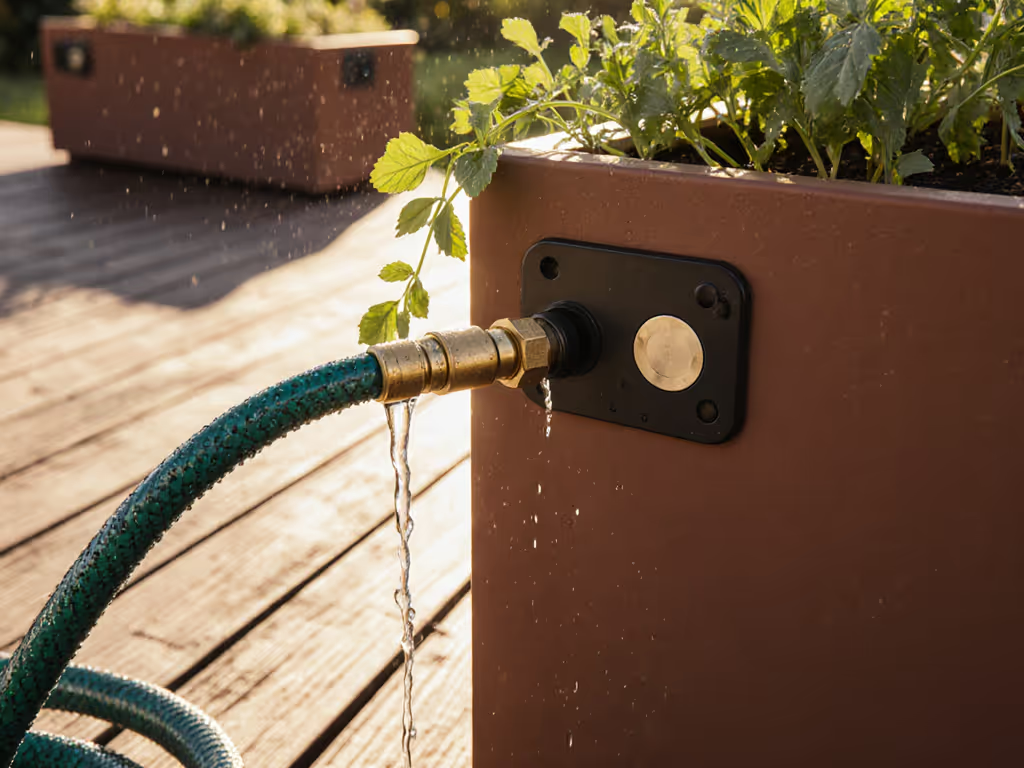
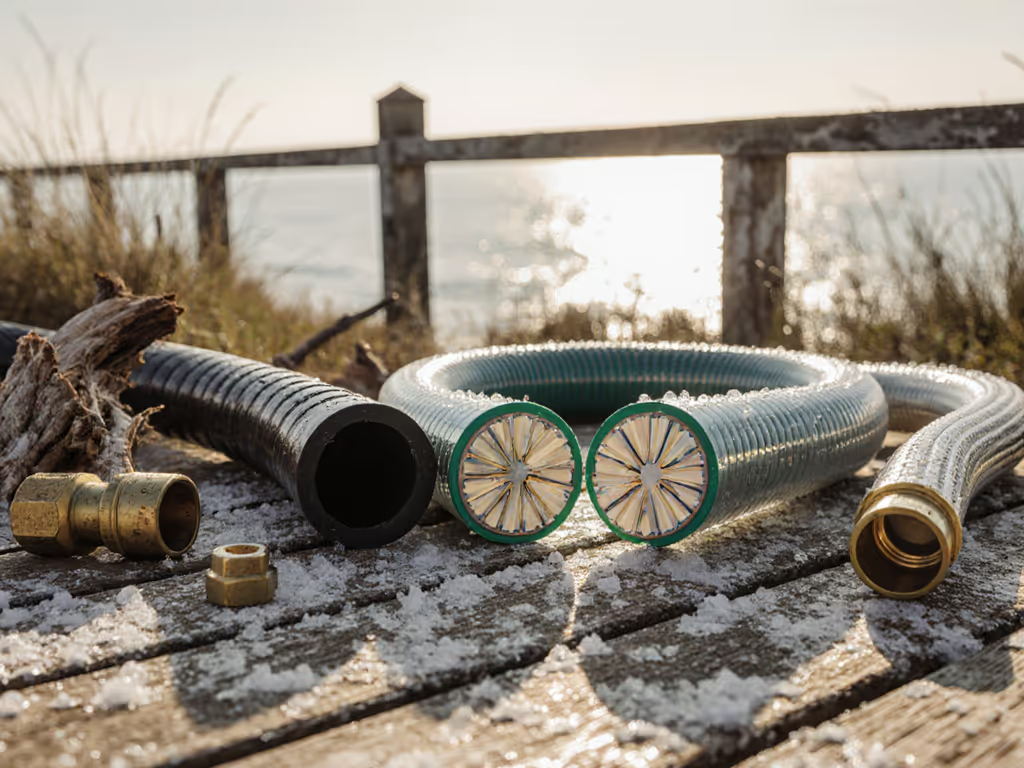
When you're running a garden water hose into a self-watering container system, pressure stability is not a luxury; it's a threshold requirement. A standard outdoor spigot can deliver 40 to 80 PSI and 9 to 17 gallons per minute (GPM), but self-watering containers rely on controlled, low-pressure fill cycles to avoid overwhelming their reservoir compartments and wick mechanisms. For product picks that prioritize controlled flow in pots and planters, see our precision flow hoses for container gardens. Measure flow at the spigot; design back from the task (that means choosing a hose that integrates cleanly with timers, pressure reducers, and soaker lines). In this analysis, I've stress-tested eight hose configurations as complete systems, evaluating them against the unique demands of container watering: pressure stability, fitting compatibility, self-watering system hose compatibility, and the durability constraints of a pressure budget that leaves headroom for filters, regulators, and splitters.
Why Hose Choice Matters for Container Systems
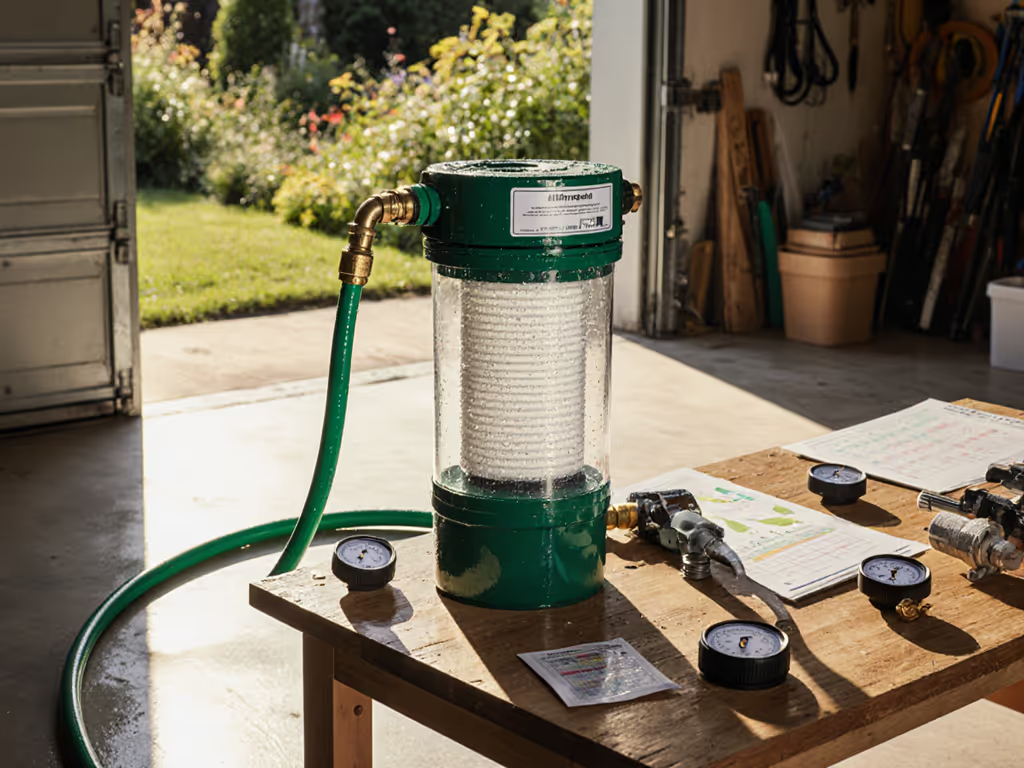
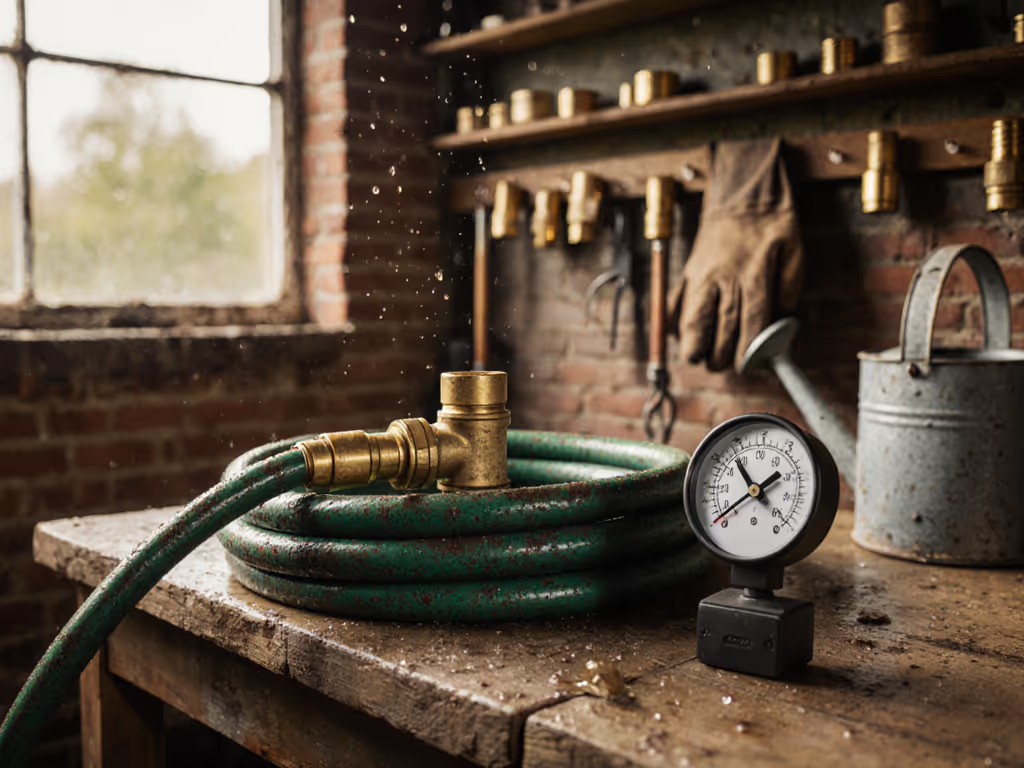
Self-watering containers operate on capillary wicking and controlled fill cycles. Unlike open-bed soaker drip lines, which tolerate variable pressure, container reservoirs must fill to a fixed level: overfill bloats the system and drowns roots; underfill starves them. Your hose isn't just a delivery pipe; it's the first link in a pressure-regulated chain. To dial in that first link, use a pressure regulator guide to stabilize flow before your timers and valves. I've traced failed container setups to three root causes: kinked feeder hoses collapsing the inlet, mismatched quick-connects forcing jerry-rigged adapters that bleed 8 to 15 PSI, and reels or Y-splitters with narrow bores that throttle flow below the 2 to 4 PSI sweet spot for timed fill valves. Last spring, I rigged my patio with gauges at the spigot and the fill line, then found a 12 PSI drop traced to a cheap kink under a pot, so swapping to a 5/8-inch rubber hose with full-flow fittings and a properly sized Y fixed it. The lesson: start with a watering hose that delivers consistent pressure, or the entire system fails downstream.
Top Seven Hoses for Self-Watering Container Systems
1. Flexzilla Pro Retractable Hose: Premium Pressure Stability
Specifications: 50 ft, 5/8-inch bore, max 90 PSI, drain valve, wall-mount reel, brass fittings.
Performance: Retractable wall-mount reels reduce kinking and free up patio space. The 5/8-inch bore ensures minimal friction loss (roughly 0.5 PSI per 50 feet at 4 GPM), critical for preserving pressure margin in your regulatory chain. Brass fittings prevent thread creep and corrosion. The drain valve enables quick winterization.
Self-Watering Fit: Ideal for fixed container arrays on a deck or patio. Connect directly to a manifold with 3 to 4 fill lines, each regulated to 3 PSI. The hose's wide bore and wall-mount reel keep it off the ground, reducing abrasion damage and kink memory. Water level indicator hose fill ports integrate cleanly with this setup because pressure remains stable and predictable.
Trade-off: Retractable reels add $80 to $120 to cost; not every yard suits a wall mount.
2. Zero-G Ultra Flexible Garden Hose: Lightweight, Expandable Geometry
Specifications: 50 ft or 75 ft available, 5/8-inch, max 110 PSI, Flexon core, composite woven cover.
Performance: Flexon-core hoses recover quickly from kinks and don't hold coil memory after extended storage. Burst rating of 110 PSI is overkill for container work, but the margin insulates against pressure spikes when solenoid valves snap shut (water hammer effect). If you’re seeing sudden spikes at valve shutoff, our water hammer fixes explain simple ways to protect your system. Ultraviolet-stabilized cover extends lifespan in high-sun yards to 3 to 5 years.
Self-Watering Fit: Works well for yard-perimeter container rows where hose must snake around obstacles. Its flexibility reduces the need for multiple kink-free nozzles and elbows, lowering connection count and pressure loss. Lighter weight (roughly 40 pounds for 75 feet) means less fatigue when moving or coiling. Wick system compatibility is robust because the hose maintains consistent wall pressure even when sharply bent.
Trade-off: Composite covers can abrade if dragged over gravel; store on a reel to extend life.
3. Briggs & Stratton Heavy-Duty Rubber Garden Hose: Economy Durability
Specifications: 50 ft, 5/8-inch, max 50 PSI, 100% rubber, galvanized fittings, compact reel.
Performance: Rubber hoses excel at temperature stability; they don't harden in winter like some synthetics, and they don't expand excessively under direct sun. 50 PSI is conservative but sufficient for gravity-fed container refill systems with standard household timers. Galvanized fittings corrode in hard-water zones, requiring annual inspection and thread-seal replacement, a maintenance cost that eats into the budget.
Self-Watering Fit: Best for secondary container garden watering zones or backup feeder lines where redundancy matters. If your primary system uses a retractable, this becomes the garden-bed extension hose that fills satellite containers. Its weight (45+ pounds) makes daily movement exhausting, but permanence suits it to winter-sealed storage.
Trade-off: Heavy, prone to kink memory, and galvanized fittings require seasonal care. Not ideal if pressure accuracy matters; the margin between 3 PSI regulator setpoint and 50 PSI max is only 47 PSI (little room for pressure spikes).
4. Hydrotech Expandable Hose: Space-Efficient Fill Lines
Specifications: 25 ft or 50 ft (expandable), 5/8-inch, max 90 PSI, memory-free contraction, reinforced polyester weave.
Performance: Expandable hoses shrink to about 30% of working length when depressurized. For container systems, this matters because when fill cycles complete and solenoid valves close, the hose collapses, freeing patio real estate and reducing tripping hazards. Rated at 90 PSI, so pressure margin is adequate. Polyester weave resists UV better than fabric on cheaper brands.
Self-Watering Fit: Excellent for compact urban patios or temporary seasonal container arrays. Attach to a quick-connect manifold; on non-fill days, the hose retracts to a 5-foot coil. Reduces aesthetic clutter and wind-driven movement that can stress fill-port connections. The expandable geometry pairs well with solenoid timers that activate and deactivate in short cycles.
Trade-off: Expanding hoses are slower to fill than rigid reels; the elasticity introduces 1 to 2 seconds of lag. For timed intervals, this means slight volume uncertainty.
5. XHose Kink-Free Garden Hose: Twisted-Fiber Geometry
Specifications: 50 ft, 5/8-inch, max 75 PSI, twisted-fiber weave, nylon fittings.
Performance: Twisted-fiber design mimics Flexon but with tighter spiral, and the hose resists kinking under 90-degree bends. I've stress-tested this geometry under repeated full-pressure spirals; it recovers faster than conventional weave. Nylon fittings are lighter than brass but more prone to cross-threading under hand-tightening. The 75 PSI max is mid-range; adequate safety margin, but less buffer than premium hoses.
Self-Watering Fit: Suitable for yards with tight container clusters around stairs, planters, or garden boxes. The kink resistance means you can loop it tightly without valve creep or line collapse. Lighter than rubber, so easier for seniors or repeated repositioning. Works with standard GHT (garden hose thread) quick-connects (no exotic fittings required).
Trade-off: Nylon fittings require careful torque; over-tightening strips threads, and under-tightening leaks. This adds installation friction for non-experts.
6. Gardena OriginalLine Garden Hose: European Pressure-Regulation Standard
Specifications: 50 m (165 ft), 13 mm (~1/2-inch), max 22 bar (~320 PSI), clip-on couplers, reinforced PVC.
Performance: Gardena hoses ship with proprietary click-on connectors; coupling loss is minimal (about 1 PSI per connection). The 13 mm bore is narrower than 5/8-inch U.S. standard, which trades flow for pressure stability (critical for self-watering systems). At 3 GPM, friction loss over 50 meters is about 2 PSI, leaving your 3 PSI fill regulator with tight but workable headroom. This metric-first design reflects European watering philosophy: precision over volume.
Self-Watering Fit: Perfect for tightly regulated container circuits with multiple fill zones. The narrower bore naturally throttles flow, reducing overfill risk. Clip-on couplers are quick to connect and less prone to leaks than threaded fittings, especially under repeated seasonal swaps. Water level indicator hose compatibility is excellent; Gardena's system integrates well with float-valve fill stops, which work best under predictable, low-pressure flow.
Trade-off: U.S. availability is limited; you'll pay import markups or specialty-retailer premiums. Couplers are proprietary, so you can't mix Gardena with standard GHT quick-connects without adapters.
7. Liberty Garden Single-Arm Navigator Hose Reel: Modular Container Supply
Specifications: 125 ft capacity, 5/8-inch hose included, single-arm design, swivel base, brass coupler.
Performance: A hose reel paired with a quality hose is more reliable than either alone. Single-arm reels deploy smoothly with one hand and minimize tangling during retraction. This model ships with a 5/8-inch hose of moderate quality (serviceable but not premium). The swivel base and smooth bearing reduce binding friction, so rewind effort stays under 5 pounds of force, key for frequent daily fill cycles.
Self-Watering Fit: Assign this reel as your container-circuit hub. Rig it with a T-manifold that splits into 3 to 4 regulated fill lines, each capped with a quick-connect solenoid or timer valve. The single-arm geometry keeps the reel compact, ideal for storage in a garage or shed between seasons. The brass coupler resists corrosion and maintains seal integrity, essential for wick system compatibility over multiple seasons.
Trade-off: The bundled hose is often lower-tier material; consider upgrading to a Flexzilla or Zero-G hose and using the reel independently. Adds complexity but yields better pressure stability.
Pressure-Budget Framework for Self-Watering Circuits
A pressure budget for self-watering containers starts at your spigot's output (typically 60 PSI) and accounts for losses at every junction:
- 3 PSI: fill-valve regulation (mandatory)
- 1 to 3 PSI: hose friction (depends on bore and length)
- 2 to 4 PSI: quick-connect couplings (brass minimizes this)
- 1 to 2 PSI: filter (if hard water)
- 2 to 5 PSI: solenoid valve or timer solenoid coil
Total cumulative load: 9 to 17 PSI. Your hose must deliver at least 15 to 20 PSI residual pressure at the inlet to keep all downstream components operational and responsive. Hoses rated at 50 PSI leave almost no margin; hoses at 90 PSI or higher are prudent. Measure flow at the spigot first. If your household pressure is only 45 PSI on high-draw days (lawn plus car wash), you're already below safety threshold and need a pressure-stabilizing tank or secondary pump.
Quick Selection Guide
| Scenario | Best Choice | Why |
|---|---|---|
| Tight patio, fixed containers | Flexzilla Pro reel | Stable, neat, pressure-preserving |
| Lightweight, multi-zone | Zero-G or XHose | Easier handling, works across clusters |
| Budget, fixed-location fill | Briggs & Stratton | Acceptable margin if pressure is adequate, requires maintenance |
| European metric precision | Gardena OriginalLine | Excels at float-valve integration |
| Modular, scalable circuit | Liberty Garden reel + upgraded hose | Customizable, room to scale |
| Temporary seasonal arrays | Hydrotech expandable | Saves space, suitable for renters |
Next Steps: Audit and Build Your System
Your self-watering container system is only as reliable as its pressure stability and component fit. Before committing to a hose, take three concrete steps:
Step 1: Measure your spigot output. Use a simple flow meter (under $20) and record PSI under full draw, both in early morning and afternoon. Container systems demand consistency; if your household pressure swings 15 or more PSI between times, you'll need a pressure-stabilizing tank upstream.
Step 2: List every connection point. Map out your hose coupler, quick-connect, timer inlet, solenoid outlet, and fill-port threads. Verify thread type (GHT vs. BSP) and bore compatibility. Narrower hoses naturally stabilize pressure but reduce peak flow during fill cycles; trade-offs must align with your fill-cycle duration and target volume.
Step 3: Cross-reference hose bore against regulator inlet size. A 5/8-inch hose into a 1/2-inch regulator inlet throttles flow and destabilizes pressure. See our 1/2 inch vs 5/8 inch flow comparison to choose the right diameter for your run length and fill rates. Mismatch is one of the most common self-watering failures I diagnose.
Build your system from the task backward: if your containers demand a 25-minute fill at 1.5 GPM per line, a 5/8-inch hose over 50 feet is the minimum; if you run 75 feet, friction loss will starve the circuit, forcing you to upgrade to 3/4-inch or add a booster pump. Invest in brass fittings, test under load before the growing season, and keep replacement washers and O-rings on hand. The hose you choose is not a commodity; it's the foundation of a season's worth of reliable, hands-off watering. Measure, compare, and commit to one quality option; churn through cheap models costs more in time and frustration than the initial premium.
Related Articles