Best Garden Hoses for Soil Microbial Health
By Leif Sørensen • 23rd Mar
The best garden water hose is one that never contaminates the soil it waters. Toxic chemicals leaching into your garden from a compromised hose will suppress microbial activity, damage soil structure, and undermine decades of organic matter preservation. Choosing the right hose material (and understanding the failure modes) protects not just your plants, but the living ecosystem beneath them.
Why Hose Chemistry Matters to Soil Ecology
A healthy soil microbiome is the foundation of plant vigor. Bacteria, fungi, actinomycetes, and protozoa drive nutrient cycling, aggregate soil structure, and suppress disease. But these microbes are sensitive to chemical stress. When you water your beds with a hose that leaches lead, phthalates, or other plasticizers, you're introducing those toxins directly into the root zone. The Ecology Center's 2016 testing of 32 hoses from major retailers found that half of all vinyl (PVC) models contained elevated lead, bromine, and phthalates.[2] Worse, phthalates detected in hose water samples measured at 25 ppb in some cases, four times the federal drinking water standard of 6 ppb.[2]
For vegetable beds, herb gardens, or any edible planting, this contamination risk is acute. For a deeper dive on choosing certified, non-toxic options for edibles, see our water-safe garden hose guide. The same water chemistry that threatens human health also stresses soil microbes, disrupting their metabolism and reproduction. Microbial diversity and water quality are not a luxury concern; they are foundational to soil contamination prevention.
The Material Science: Polyurethane and Rubber vs. PVC
Not all hose materials are equal. Extensive testing has shown that polyurethane and rubber are the only hose materials free from elevated levels of lead, bromine, and antimony.[5] For engineering details across materials, see our rubber vs vinyl vs polyurethane comparison.
PVC (vinyl) hoses dominate the market because they are cheap to manufacture. However, they require chemical plasticizers, primarily phthalates, to make them flexible. Over time, especially in sunlight and warm conditions, these additives leach into water. Half of the PVC hoses tested by the Ecology Center also contained contaminated recycled vinyl scrap containing electronic waste and associated toxins.[2]
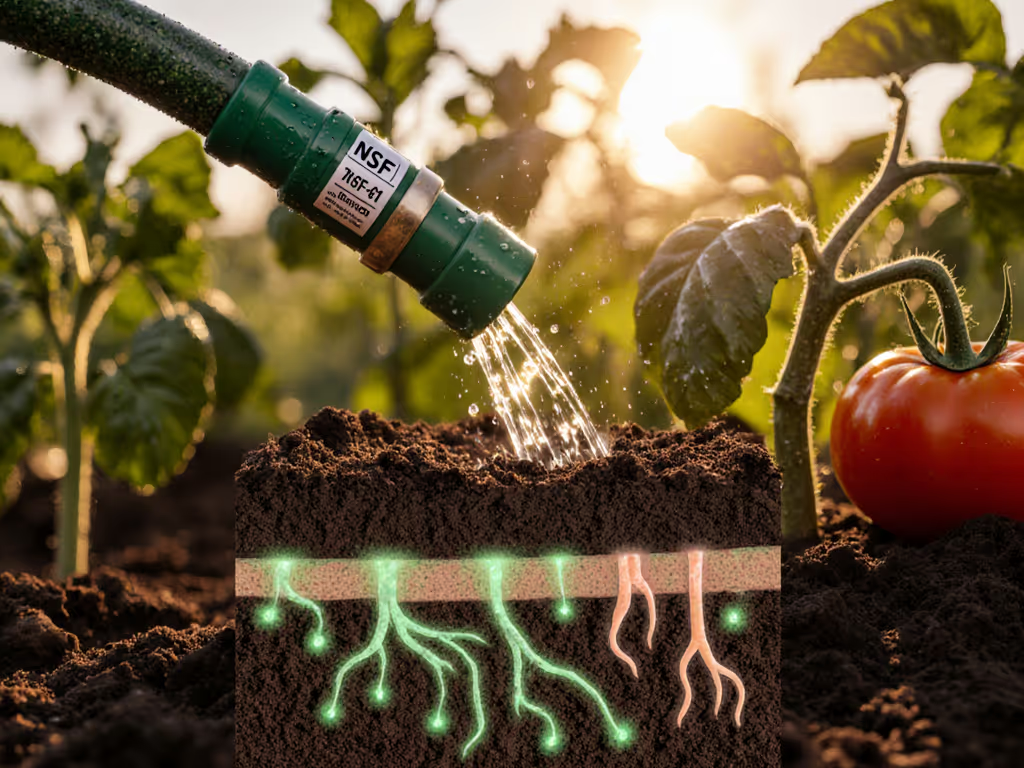
Polyurethane hoses, by contrast, achieve flexibility without phthalates. When certified to NSF/ANSI standards, they are formulated as food-grade, lead-free, and BPA-free.[1] Rubber hoses (typically natural or synthetic elastomer construction) similarly resist chemical leaching when properly manufactured.
Build for your climate, and leaks stop before they start (and hose contamination stops before water touches soil).
Certifications: The Code-Aware Safeguard
Certifications translate to assurance. When evaluating hose material soil interaction, look for these standards:
- NSF/ANSI 61 Certified Drinking Water Safe Components: verifies the hose does not leach lead or phthalates at hazardous levels
- NSF/ANSI 372 Certified Drinking Water Safe Components (Lead Content): specifically assesses lead leaching
- Compliance with the Safe Drinking Water Act: confirms lead content below federal thresholds
These certifications are not marketing labels; they are third-party validated test results. A hose carrying NSF/ANSI 61 certification has undergone rigorous chemistry testing and aging protocols. It will not poison your soil microbes.[1]
Which Hoses Perform Best
Based on Ecology Center testing, all top-rated hoses were polyurethane models.[2] Water Right polyurethane hoses are labeled as lead-free, phthalate-free, and 100% FDA-grade (the same certification standard applied to food-contact plastics).[1] Earth Easy hoses, also polyurethane and made in the USA, meet identical NSF standards and are noted for their lightweight, durable construction.[1] For users seeking a coil hose design, the Big Boss AquaStream Ultra Light and Pocket Hose Dura-Rib II both scored top marks in independent testing for material safety and kink resistance.[2]
The trade-off to note: slimmer polyurethane hoses (like the 7/16" diameter models) may deliver slower flow than wider rubber or PVC alternatives, especially at distance.[1] If you need high flow for pressure washing or rapid filling, a 5/8" or 3/4" polyurethane model (or a certified rubber hose) is worth the slight weight increase. Use our garden hose diameter guide to match diameter to your flow needs.
Climate Margins and Freeze-Thaw Failure
Toxic hose chemistry is only one failure mode. Thermal stress is another. PVC hoses become brittle in cold and will crack during freeze-thaw cycles. Polyurethane hoses maintain flexibility in sub-freezing conditions, but, like all hoses, must be drained before winter. For step-by-step seasonal prep, see our seasonal hose care guide. A surprise April freeze burst a supposedly "all-weather" hose at a rental I once audited. The hose itself was vinyl, not even rated for potable use. I replaced it with a polyurethane model, added a vacuum breaker to the spigot, insulated the connection, swapped in quick-drain couplers, and marked the drain-down valve. The next spring, no leaks, no fines, and measurable water savings. The lesson: the best hose is only as reliable as its whole system (hose, fittings, drainage, and winterization workflow).
For freeze-prone regions, specify polyurethane hoses rated to at least -40°F and always install a drain-down valve at the spigot's lowest point. UV exposure also degrades hose walls over time; store coiled hoses indoors or under shade during off-seasons to extend life.
Microbial Ecosystem Hose Practices
Beyond material choice, three practices protect soil microbes:
-
Use a filter or screen at the spigot, which catches sediment and debris that can clog drip lines and harbor anaerobic zones in soil
-
Avoid high-temperature water from garden hoses left in sun; water heated above 85°F can stress rhizobia and other beneficial root-zone organisms. Learn how hose color affects water temperature to minimize heat stress. Let sun-heated hose water cool, or use it only for non-edible ornamental areas
-
Pair your hose with drip irrigation for edibles, which reduces foliar disease, minimizes soil disturbance, and delivers consistent moisture that favors stable microbial communities
Soaker hoses are useful, but check their certification too. Some are made from recycled rubber with undisclosed additives; polyurethane soaker hoses carry the same NSF stamps as drinking-safe hoses.
Summary and Final Verdict
The best garden water hose for soil microbial health is a certified polyurethane or rubber hose, NSF/ANSI 61 or 372 approved, lead-free, phthalate-free, and matched to your climate zone with a proper drain-down system. Polyurethane models offer the best balance of safety, weight, kink resistance, and freeze resilience across most U.S. regions. Water Right, Earth Easy, Big Boss, and Pocket Hose all deliver this standard at competitive price points.
Skip PVC. The upfront savings of a vinyl hose evaporate when you factor in microbial damage, shortened lifespan in thermal extremes, and the mental cost of uncertain water quality. Your soil ecosystem is not a place to cut corners. Invest in certified, climate-matched hose material, install a winterization checkpoint, and build a system that works season after season without poisoning the life that makes your soil alive.
Related Articles