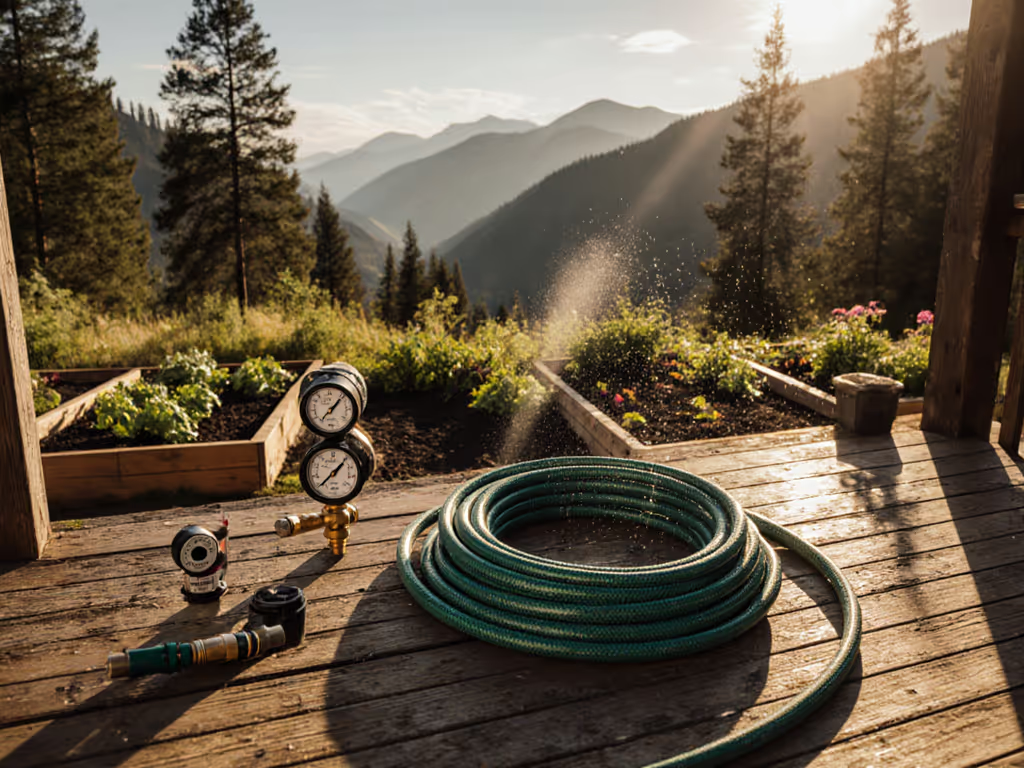
Therapeutic Garden Watering: Healthcare System Guide
By Priya Nandakumar • 23rd Feb
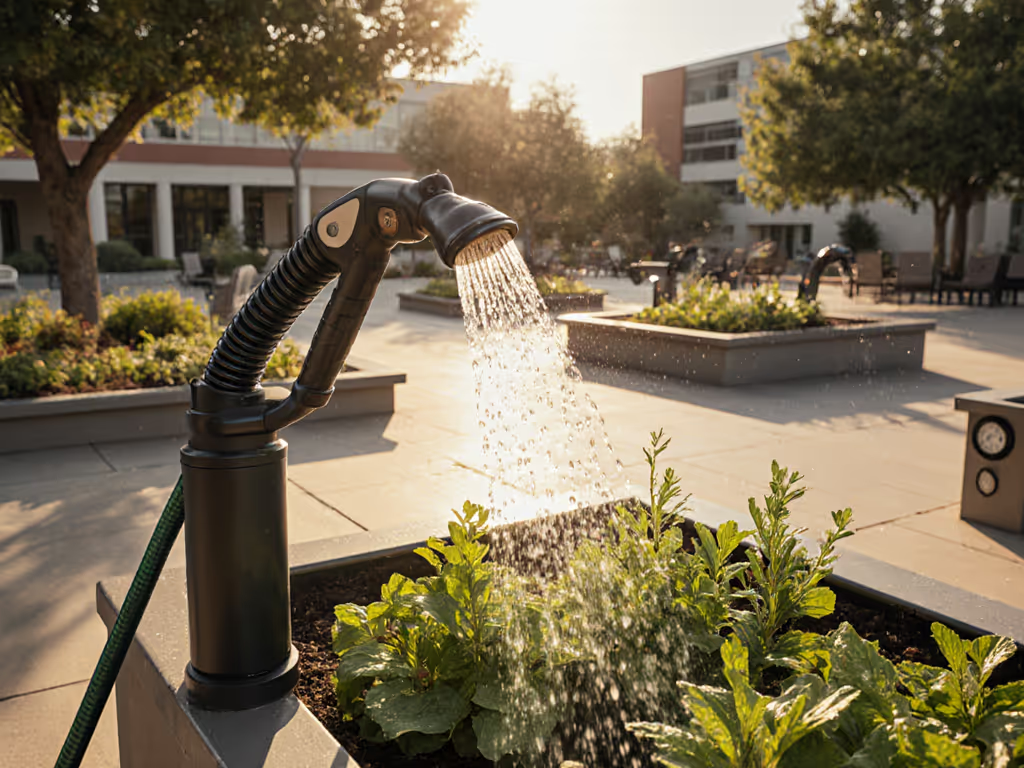
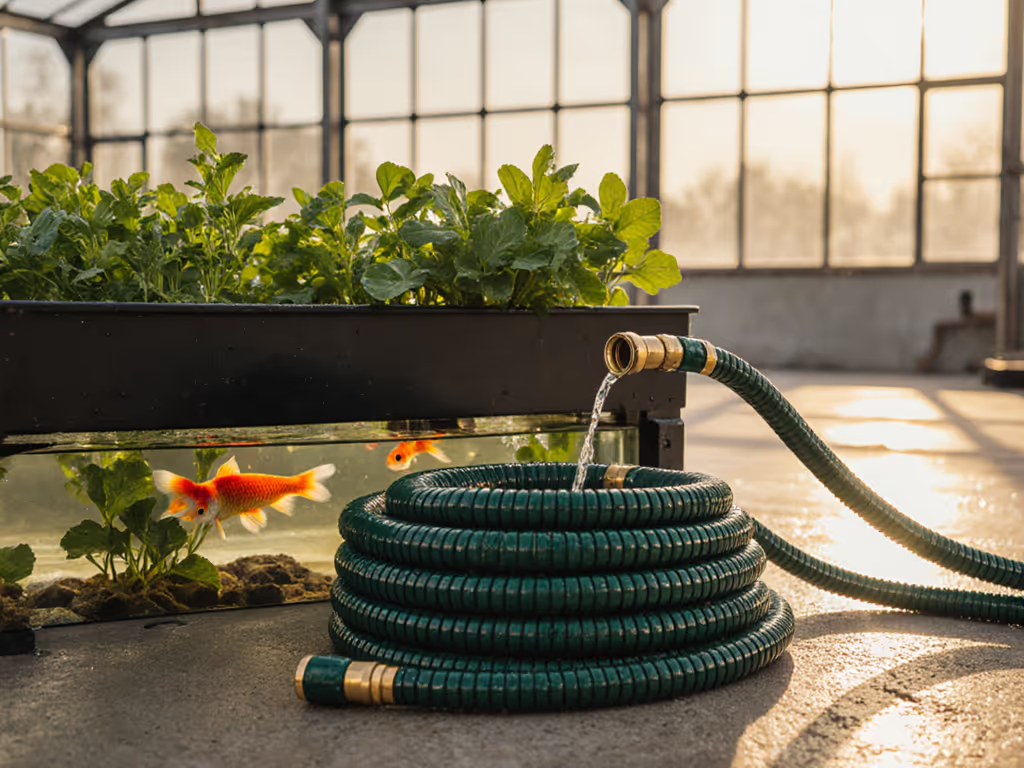
Therapeutic gardens in hospitals and healthcare facilities aren't luxuries, they're clinical assets. Research from Legacy Emanuel Medical Center in Portland documented that garden access reduced stress-related symptoms in ICU family visitors comparable to post-traumatic stress recovery, while critical care nurses showed measurable drops in sadness, anger, and fatigue following garden breaks[6]. Yet most healthcare facilities stumble on the infrastructure side. A therapeutic garden hose and watering system fails silently until a unit manager discovers plants dead mid-summer because the soaker line choked out at 20 PSI, or discovers a reel clogging a wheelchair ramp. For ADA-friendly storage that keeps paths clear, see our best garden hose reels and placement tips. This guide walks through the hard questions: what actually flows, what holds pressure, and why weak links in your water delivery destroy the garden's therapeutic value before patients ever see it.
What Makes Therapeutic Garden Watering Different from Home Gardening?
Therapeutic gardens in healthcare aren't ornamental yards. They are patient-care zones. That changes the watering calculus entirely.
First, uptime trumps cost. A homeowner with a kinked 5/8-inch hose can shut it off, untangle it, and retry. A hospital staffer managing patient flow can't stop rounds to debug a leaky connection. The facility needs pressure stability and self-regulation. For device-level solutions, see our garden hose pressure regulators to stabilize flow across shifts. Research consistently shows that automated or low-touch watering (specifically sub-irrigation and self-contained systems) is non-negotiable for healthcare facility adoption[5][2]. Why? Staff churn, competing priorities, and liability. A garden allowed to wilt becomes a morale crusher, not a healer.
Second, accessibility overrides weight and looks. Therapeutic gardens often serve patients with mobility challenges, occupational therapy participants, and staff on 12-hour shifts. A heavy, kinked hose lying across a walking path is a tripping hazard and a design failure. Similarly, a spigot location chosen for plumbing convenience (but 80 feet from the garden) will never be serviced consistently if staff must drag a flaccid 50-footer across gravel.
Third, regulatory and durability standards tighten. Healthcare facilities in freeze-thaw climates can't have hoses that burst annually. Composite or materials-science planters with integrated irrigation sidestep traditional hose failure modes entirely[1]. But when field-deployable hoses are required (for manual refill, emergency backup, or seasonal adjustments), the selection logic flips from "cheapest GHT-threaded rubber" to "how do I guarantee no pressure loss across the full working path?"
What Flow and Pressure Do Therapeutic Gardens Actually Need?
This is where data-driven design meets landscape reality. Therapeutic gardens are not high-flow. A lawn sprinkler or pressure-washer rig demands 40-60 PSI and 5+ GPM. A therapeutic garden (with sensory plantings, water features, and soaker circuits) typically operates at 20-35 PSI and 1-4 GPM, depending on the irrigation method.
Let's break the common configurations:
Sub-irrigation and wicking systems: These deliver water passively, via soil-wicking technology (Planterra's model) or reservoir-fed planters[5]. No hose pressure required, only a reliable trickle fill (0.5-2 GPM) that can refill a multi-day reservoir. The payoff is precision: plants receive exactly what they need, water waste drops by 30-50% compared to spray, and staff maintenance collapses to a single weekly top-off or an automated timer[2].
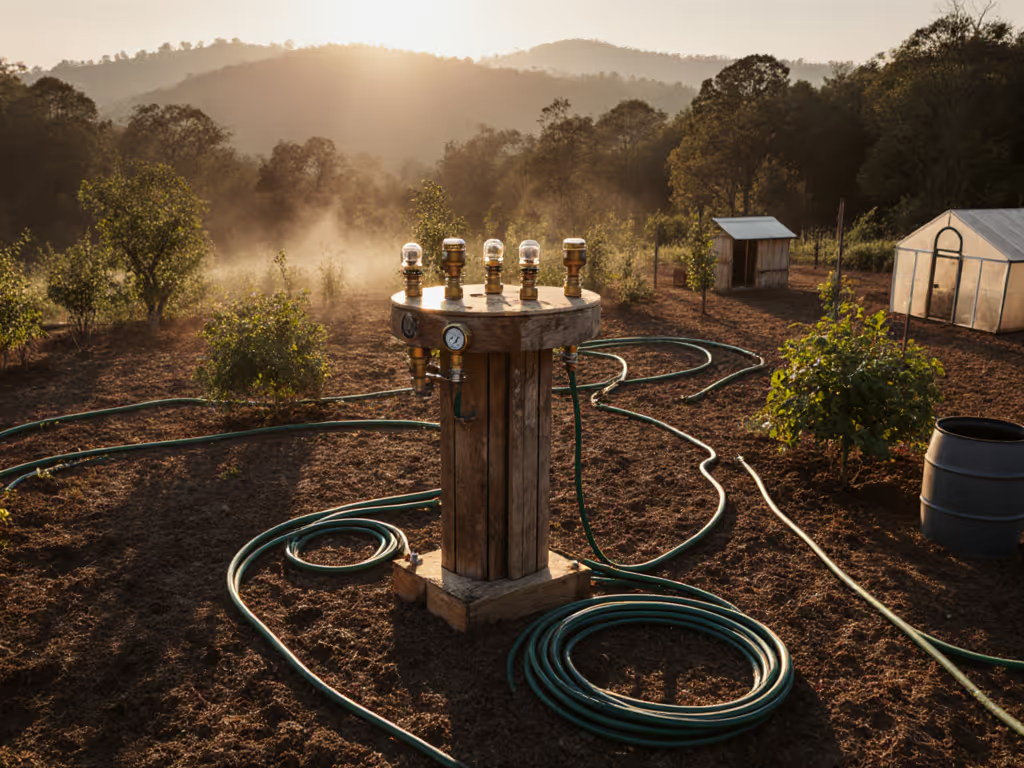
Drip and soaker-line circuits: If the garden includes ground-level beds or mixed plantings, you'll run a 3/4-inch supply hose (main line) at 20-30 PSI down to a pressure regulator, then split into 1/2-inch drip tape or 1/4-inch soaker lines serving plant zones. The regulator is the keystone; without it, drip emitters pop or clog under spigot pressure.
Manual watering and top-up: For portable soaker wands or hand-filling of strategic pots (common in rotational therapy gardens where patients participate), you need a full-bore connection (no kinks, no throttle), even if it's just 10 feet. A single kinked 5/8-inch hose under a flower pot can drop 12 PSI, turning a steady stream into a trickle [author's experience]. In a healthcare setting where occupational therapy patients depend on predictable resistance and flow, that pressure drop is a silent failure.
How Do I Size and Route the Supply Hose?
Here's where the "pressure budget" concept matters. Every fitting, every 50 feet of hose, every turn costs you flow and pressure. Design backward from the task: What is the farthest plant bed? What's the minimum PSI it needs to thrive?
Assuming a 30 PSI spigot supply and a therapeutic garden needing 25 PSI at the nozzle or emitter:
- Your pressure budget is 5 PSI (that's your margin for hose friction, fitting losses, and accessories).
- A 3/4-inch rubber hose loses ~1 PSI per 100 feet at 2 GPM. A 5/8-inch hose loses ~2.5 PSI per 100 feet.
- If your garden is 150 feet from the spigot, a 5/8-inch hose consumes 3.75 PSI in friction alone (you've blown your budget).
- Solution: 3/4-inch hose, 100 feet maximum, plus a pressure regulator and Y-splitter rated for full flow (no undersized branching).
Fittings matter equally. A cheap brass Y-splitter with 1/2-inch outlets (even though the inlet is 3/4-inch) will choke flow and create turbulent pressure loss. Full-flow fittings (where the outlet diameter matches the inlet) preserve your pressure budget. For a deeper breakdown of diameter choices and flow math, see our garden hose diameter guide for small to large facilities.
What Materials Survive Healthcare Environments?
A therapeutic garden in a hospital may sit in direct sun on a rooftop, experience freeze-thaw in winter, or see seasonal UV exposure that degrades rubber hoses in 2-3 years. Durability isn't a luxury; it's a staffing issue. Every replacement hose requires procurement, installation downtime, and renewed training.
Rubber hoses (traditional GHT): Durable but heavy (staff fatigue), prone to kinking, and UV-sensitive in full sun. Lifespan: 3-5 years in harsh climates. Best use: short runs (under 25 feet), manual reel-based systems with frequent turnover, or backup lines.
Vinyl hoses: Lighter, less kinky, but more prone to swelling under heat and degradation from chlorine in potable supply lines. Not recommended for therapeutic gardens in hot, sunny regions. Compare climate-specific pros and cons in our rubber vs vinyl durability guide to pick materials that last.
Reinforced polymer hoses: Newer formulations (e.g., double-helix or spiral wrap) resist kinks, handle UV better, and weigh less. Lifespan: 5-10 years. Cost premium (~20-30%) often justified by reduced replacement cycles and staff ergonomics.
Composite and integrated systems: Green Circle Garden-style planters eliminate hose exposure entirely by building irrigation into the planter[1]. No UV damage, no freeze risk, no kinking. Ideal for permanent therapeutic garden installations where the planter is the focal point.
What Are the Top Failure Modes in Healthcare Therapeutic Gardens?
1. Pressure collapse from undersized hoses or Y-splitters: A garden fed by a single 5/8-inch, 100-foot run from a Y-splitter with 1/2-inch outlets will see 6-8 PSI loss before water reaches the beds. Drip emitters designed for 20 PSI start clogging or delivering unevenly.
2. Freeze damage: Water trapped in a reel or hose doesn't drain fully before a hard freeze. The ice expands, splits the hose or fitting, and the system fails silently until spring watering reveals the burst.
3. Spigot or fitting leaks: Cheap washer-based connections degrade after 1-2 seasons. Healthcare facilities can't tolerate a weeping spigot that pools water, creates slip hazards, or signals "broken" to patients and families.
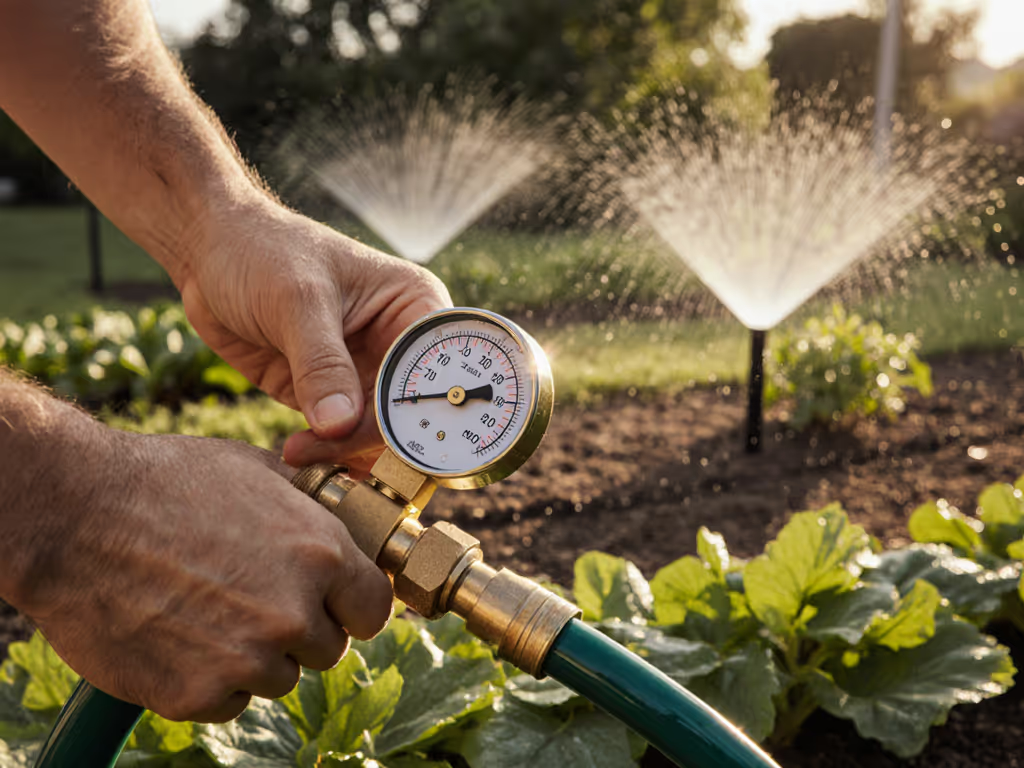
4. No pressure regulation: A therapeutic garden bed fed directly from a 40 PSI spigot will flood during heavy irrigation and starve during low-flow cycles. A regulator (set to 25 PSI) stabilizes soil moisture and prevents washout.
5. Inaccessible shut-offs: If the only valve is the spigot at the building, and the garden is 200 feet away, staff can't turn off a leak quickly. Result: water damage and garden neglect.
How Do I Winterize a Therapeutic Garden Hose System?
Freeze cycles are a system-level design decision, not an afterthought. In USDA zones 4-6 and colder, you must drain and store hoses indoors by November or accept annual replacement costs. If you operate in sub-zero climates, follow our advanced hose winterizing guide to prevent burst failures.
Best practice: Install a backflow valve and drain valve at the spigot, plus a secondary drain at the lowest point of the supply hose run. After the last frost date passes and temperatures stay above 45°F consistently (typically mid-April in zone 5), purge air from the lines, reconnect, and pressurize slowly.
If hoses must stay installed year-round (e.g., in a heated greenhouse attached to the facility), wrap them with pipe insulation and confirm that no water pools in reels or coiled sections. A single pocket of standing water will freeze, expand, and rupture the hose.
Moving Forward: Key Decisions for Healthcare Facilities
Therapeutic gardens work because they reduce staff and patient stress, improve clinical outcomes, and signal care to visitors[6]. But a watering system that fails is worse than no garden at all, it becomes a symbol of institutional neglect.
Start with three hard questions:
- Is the garden permanent or seasonal? Permanent gardens justify integrated irrigation (planters with sub-irrigation)[1]. Seasonal or therapy-activity gardens may rely on manual hoses but must have full-flow components and proper pressure regulation.
- Who owns the maintenance? If nursing staff manage it, automatic timers and sub-irrigation are non-negotiable. If grounds staff maintain it, invest in durable, user-friendly hoses and reel systems.
- What's your freeze risk and climate zone? Drainage and winterization protocols differ sharply between zone 7 and zone 4. Build that into your procurement spec.
Measure flow at the spigot; design back from the task. A therapeutic garden watering system that delivers reliable pressure and flow (without kinks, leaks, or surprises) becomes invisible infrastructure. Patients and staff see only the garden, not the hose. That's the goal.
Related Articles