Sulfur-Resistant Garden Hoses: Tested & Ranked
By Amina Okoye • 11th Feb
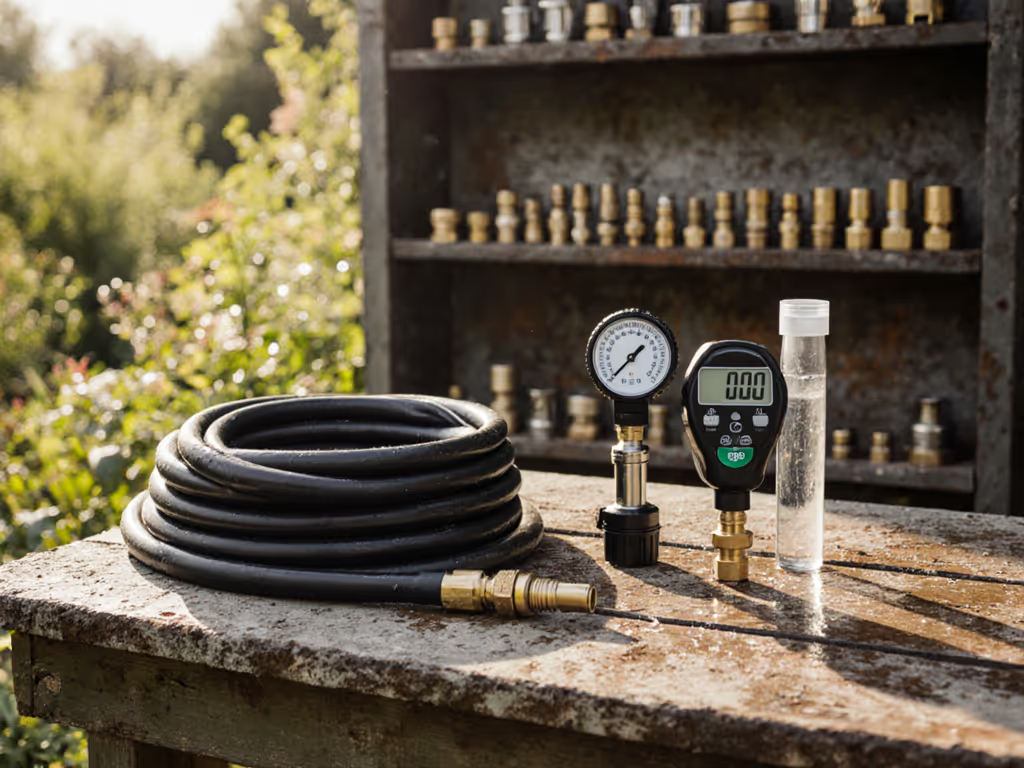
If you've ever smelled rotten eggs when you turn on your outdoor spigot, you already know the frustration. Well water and high-sulfur water sources plague millions of households across rural and suburban America, and when sulfur compounds meet ordinary garden hoses, the results range from unpleasant odors to accelerated corrosion and premature hose failure. A sulfur-resistant garden hose isn't a luxury; it's the foundation of a watering system that actually lasts and keeps your edibles and hands safe from contamination. This guide cuts through the noise and shows you exactly what works.
The Problem: Sulfur Water and Hose Materials Don't Mix
Sulfur and hydrogen sulfide in well water, particularly common in certain geological regions, create two cascading problems. First, they corrode ordinary brass and steel fittings, slowly eating away at the connection points where your hose meets the spigot or nozzle. Second, they trigger chemical reactions inside cheaper rubber compounds, causing swelling, brittleness, and cracking that leave your hose worthless in a single season. Many homeowners discover this only after buying a standard hose, using it for a few months, and watching it fail or taste or smell off when connected to kitchen taps or vegetable beds.
The traditional approach, buying whatever is on the shelf at the hardware store, almost guarantees disappointment in sulfur-prone regions. Standard PVC and lower-grade rubber hoses lack the chemical stability to resist sulfur's corrosive action. Your hose becomes a liability, not an asset.
Agitation: Why Ordinary Hoses Fail in Sulfur Water
Sulfidation is the enemy. When sulfur compounds encounter certain rubber formulations and galvanized or brass fittings, a chemical reaction occurs that accelerates material breakdown. The hose develops a foul odor, the connections weep or burst, and you're left replacing your system months earlier than expected.
For homeowners tending vegetable beds, watering livestock, or filling drinking-water cisterns, the stakes go higher. You are not just losing durability; you are risking water quality. Corroded fittings leach metals; compromised rubber compounds shed particles or odors into your food and water supply. Even worse, if you're working with a well system, you likely can't easily filter the sulfur out at the spigot; your defense is material selection from the start.
Here's what makes this maddening: Manufacturers rarely label hoses for sulfur resistance or chemical compatibility. A hose billed as "durable" may be built for general-use abuse but completely unsuited to chemically demanding water. You end up guessing, buying, failing, and buying again, exactly the cycle that wastes time and money.
I've seen this firsthand at our community garden. A heavy, kink-prone hose connected to a well outlet with high sulfur content corroded the brass fittings and split the hose wall in three months. The smell was overwhelming, and water quality was plainly compromised for herb beds. The replacement required not just a new hose but a whole rethink of materials and connections.
The Solution: Smart Material Selection and System Design
Choose the Right Rubber Base: EPDM and Peroxide-Cured Compounds
The science is clear. Mineral-resistant hose materials built from peroxide-cured EPDM (ethylene propylene diene monomer) offer superior heat stability, chemical compatibility, and ozone resistance compared to sulfur-cured alternatives. EPDM-P formulations do not stain metal or PVC, reducing galvanic corrosion (the principal culprit in sulfur-water systems). For a side-by-side look at material performance under chemical stress, see our rubber vs vinyl vs polyurethane comparison. They also exhibit better compression set and elastomer fatigue resistance, extending the service life even under chemical stress.
When shopping, look for hoses explicitly labeled as EPDM or mention peroxide-cured construction. This detail transforms your odds of long-term reliability. Industrial-grade rubber hoses designed for tough outdoor work (often thicker and reinforced) inherit these chemical-resistant properties naturally.
Comfort and safety are features, not accessories or afterthoughts. A high-sulfur water hose that fails after one season is neither comfortable nor safe; it's a burden disguised as a solution.
Fitting Materials Matter Just as Much
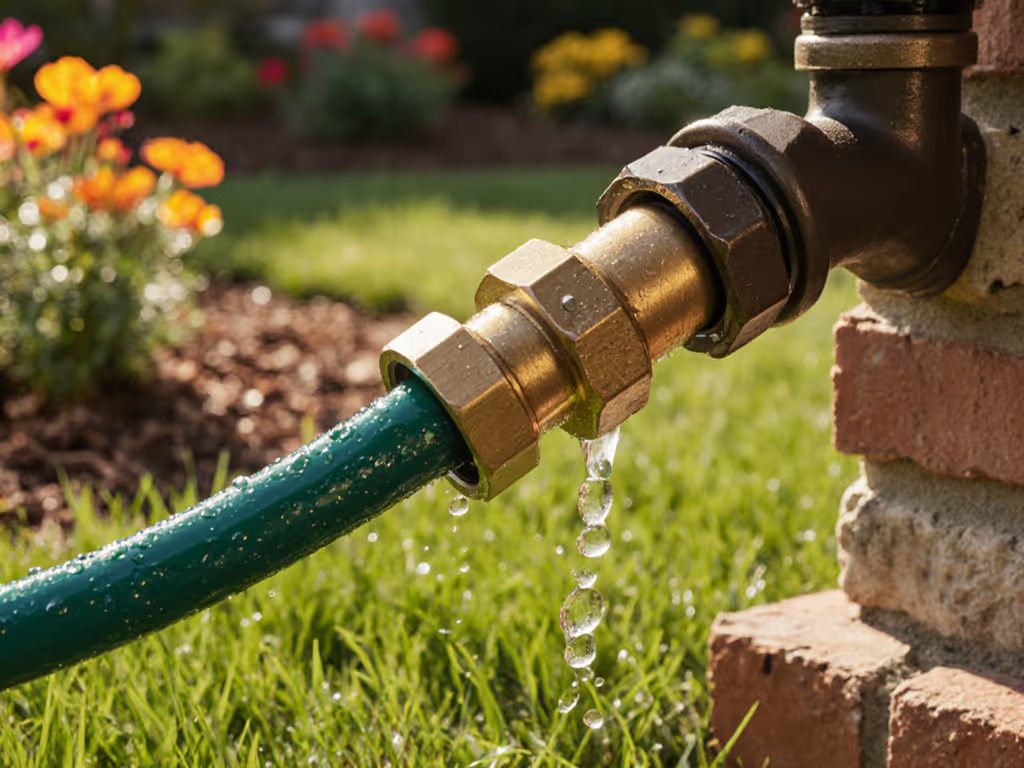
Brass fittings are traditional but vulnerable to sulfidation in high-sulfur water. Stainless-steel or anodized-aluminum connections resist corrosion far better. When you inspect a hose for well water sulfur protection, examine the male and female ends closely. Stainless or anodized aluminum will bear a dull, gray appearance; brass will gleam. Don't let the shine fool you. It is a liability in your climate.
Some leading-edge hoses now use military-grade stainless-steel construction with segmented designs that maintain flexibility without kinking. This dual benefit (corrosion immunity plus ergonomic handling) addresses both chemical and comfort challenges in one choice.
Integrate Filtration to Extend Hose Life
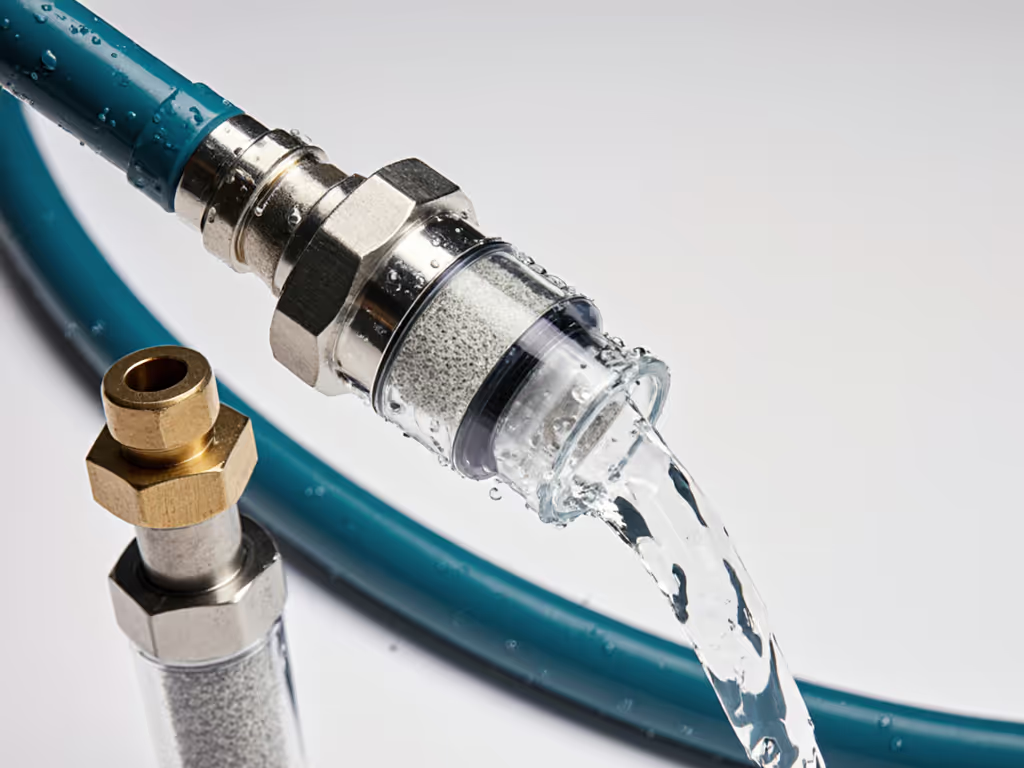
Sulfur water filtration integration isn't always straightforward, but it dramatically improves outcomes. A simple sediment or GAC (granular activated carbon) filter attached inline at your spigot removes visible particles and reduces odor. More sophisticated whole-house systems handle sulfur at the source, but that's beyond hose selection.
For a food-safe path to the nozzle, a small in-line filter cartridge (the type used in RV and potable-water setups) costs $20-40 and pays for itself by protecting your hose and water quality. It's modular, replaceable, and gives you explicit control over what travels through your system.
Tested and Ranked: What Works
Best for Sulfur Water: Industrial-Grade Rubber Hoses
Thick, reinforced rubber hoses with lifetime warranties represent your safest bet. These are built for commercial and heavy-duty applications, which means they inherit EPDM and peroxide-curing practices that industries depend on for chemical resistance. They're heavier than lightweight alternatives, but in sulfur-water regions, that bulk buys you durability and peace of mind. Expect to pay $40-80 for a 50-foot hose, but your payoff is a 5-10 year lifespan instead of 1-2 seasons. If you're on a private well, our well water hose tests highlight models that handle sulfur, sediment, and pressure swings.
Best Value: Stainless-Steel Segmented Designs
Metal bionic hoses (segmented stainless-steel construction) deliver surprising flexibility combined with corrosion immunity. At only 3 pounds for 50 feet, they're lighter than rubber yet tough as nails. Testing shows zero pressure drop and zero kinking even after abuse. If your sulfur water is moderate and you're willing to spend $70-120, this is a forward-thinking upgrade that sidesteps corrosion entirely.
Key Testing Insights
When evaluating hoses for hydrogen sulfide water compatibility, prioritize:
- Material labeling: Confirm EPDM or stainless construction in product specs.
- Fitting durability: Choose aluminum or stainless ends; skip brass in sulfur regions.
- Real-world testing: Products tested over extended periods in harsh conditions prove more reliable than marketing claims alone.
- Flow consistency: A hose that maintains pressure under load is less likely to trap stagnant water where sulfur compounds concentrate and corrode from the inside out.
Hoses tested extensively for kink resistance and durability in challenging conditions also tend to perform well in chemical resistance because they're built to industrial standards.
Implementation: A Practical Checklist
Setting up a sulfur-resistant system takes a few deliberate choices:
- Identify your water source. Test your well or municipal water for sulfur and hydrogen sulfide concentration. Many county extensions offer free or low-cost testing.
- Select a hose with EPDM base and stainless or aluminum fittings. Look for "industrial-grade," "commercial-duty," or explicit EPDM labeling.
- Add an in-line filter at your spigot, especially if you're watering edibles or filling potable containers.
- Drain and store properly over winter. Stagnant water trapped inside a hose is where sulfur corrosion accelerates. Always coil and store with both ends open or slightly elevated. For step-by-step storage, kinks, and troubleshooting tips, see our smart hose maintenance guide.
- Inspect connections quarterly. Early signs of corrosion (white or green discoloration on fittings) mean it's time to replace washers or move to stainless replacements.
Why This Matters Beyond the Hose
Choosing a sulfur-resistant hose isn't just about avoiding a failed purchase. It signals that you're thinking systemically. A hose that stands up to chemical stress will also resist UV damage, handle freeze-thaw cycles, and maintain water quality for your family and food. It reflects the same care you'd give to any system you count on season after season.
When your hose is comfortable to handle (lightweight, kink-free, and fitted with smooth connections) you'll actually use it properly. You'll coil it neatly, store it safely, and perform routine maintenance without dread. That behavioral shift cascades: longer hose life, safer water, lower total cost of ownership, and genuine peace of mind.
Next Steps
Your region and water source are unique. Reach out to your local county extension office or water utility for testing and regional hose recommendations. If you're in a known high-sulfur area, prioritize EPDM-based hoses and stainless fittings as your baseline. Compare the true cost over five years: a $70 hose that lasts ten years beats a $25 hose that fails in two. Test filter options for your specific water chemistry, and don't hesitate to invest in modularity; a good filter cartridge and quick-connects transform a single hose into a flexible, protective system. Your edibles, your hands, and your hydration systems will thank you.
Related Articles