CSA Garden Hose System: High-Volume, Leak-Free Pickup Watering
By Leif Sørensen • 25th May
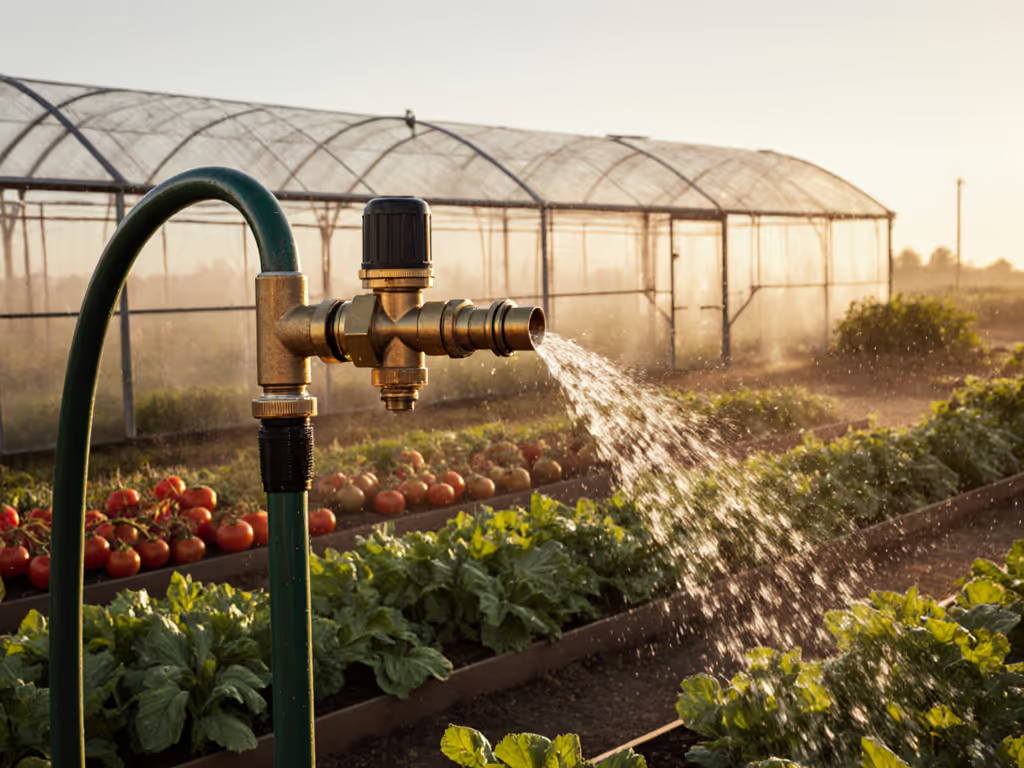
CSA garden hose system fundamentals: what is different about pickup watering?
If you are running a market-style CSA or a neighborhood pickup hub, your CSA garden hose system has a tougher job than a typical backyard hose. It must handle high-volume community watering, survive rough handling on busy pickup days, and often be rolled out and put away in minutes.
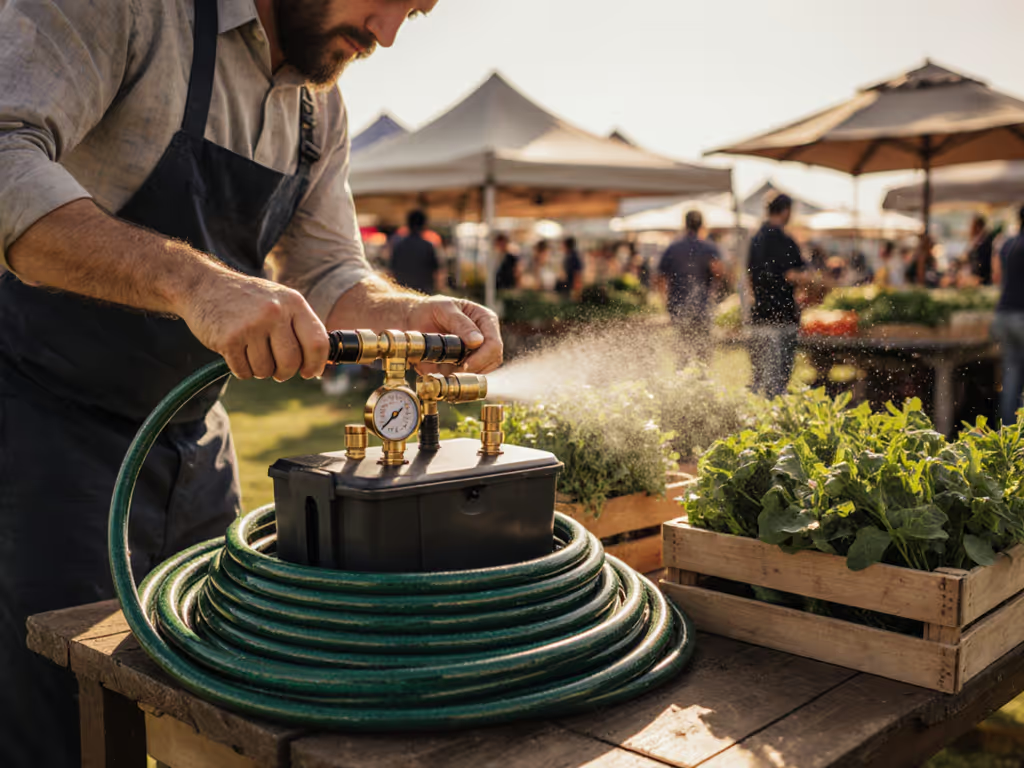
In community-supported agriculture, members come to a farm or pickup site to select produce and often wash, hydrate, or cool items on the spot, a pattern that looks a lot like a compact farmers market. That means lots of short, intense bursts of water use at once, often through multiple hoses. Your community-supported agriculture watering layout has to deliver that volume without leaks, kinks, or unsafe backflow.
This guide walks through the system from spigot to nozzle as a set of product categories to choose from, and compares how each option performs in a CSA, farmers market distribution hose, and CSA pickup point irrigation context. The lens is data-driven: flow, pressure, climate margins, and failure modes up front.
Build for your climate, and leaks stop before they start.
Design targets: flow, safety, and climate margins
Before comparing components, set design targets. Otherwise, you are buying hardware without a spec.
Flow: how many stations, how much water?
For most small CSA or pickup installations, you are solving for one to three active stations at once:
- One or two handheld rinse hoses for members to wash produce.
- Possibly a third line for filling bulk tanks or stock tanks.
- Occasionally, a line feeding display-bed soaker or micro-irrigation.
A typical residential spigot on 3/4 in supply can deliver roughly 5-8 gallons per minute (gpm) at 40-60 psi under real conditions, depending on plumbing runs and restrictions. That is your budget. Each nozzle or open hose uses about:
- 4-6 gpm for an unrestricted open 3/4 in hose at moderate pressure.
- 2-4 gpm for a typical spray nozzle set to shower.
So if you expect two rinse stations running at once, design for at least 5-6 gpm at the end of your layout. That drives the rest: hose diameter, manifold sizing, and quick-connect type.
Pressure and friction loss
Friction loss in hoses scales with length and increases sharply as diameter shrinks. If you need a refresher on matching pressure ratings to real-world watering, see our garden hose PSI ratings comparison. As a rule of thumb used in irrigation planning, a 3/4 in hose may lose about half to a third the pressure over a given length compared with a 1/2 in hose at the same flow.
For a CSA pickup:
- Keep main runs (trunk lines) at 3/4 in ID when possible.
- Limit any 1/2 in or small-bore accessory to short whips or branch lines.
- Avoid undersized timers, Y-splitters, or filters labeled for light-duty home use if you are feeding multiple stations.
Climate margins: freeze-risk window and heat/UV
Most CSA pickup systems are seasonal. The trap is the shoulder seasons. A warm March or April day invites you to hook everything up, then a surprise overnight freeze bursts hoses, housings, or manifolds.
I have seen one light-duty 'all-weather' hose at a rental split lengthwise after one clear April night, just because water was trapped in a reel with no drain-down. After that audit, the run was re-built with a vacuum breaker, drain-down valve, insulated spigots, and rubber hoses with quick-drain couplers. The next spring: no leaks, no fines, and measurable water savings.
For your CSA layout:
- Assume a freeze-risk window wider than your main harvest season.
- Choose components that can be quickly drained and disconnected.
- Avoid closed, non-draining reels in freeze regions unless you are disciplined about blow-out.
- In high-heat or high-UV zones, favor rubber or UV-stable polyurethane over vinyl.
With that framework, we can review the key product categories.
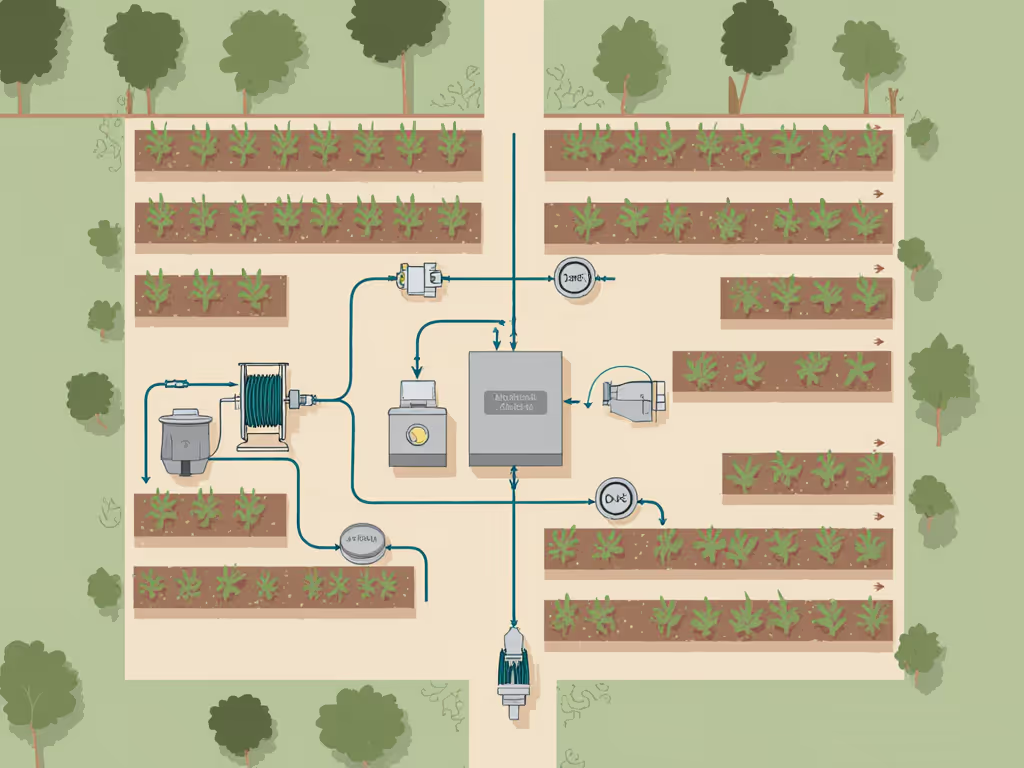
Product category 1: trunk hoses for high-volume community watering
The trunk hose is the backbone from spigot to your distribution manifold. Its job is to move volume, not to be feather-light. Here are the main categories and how they fare in a CSA or farmers market distribution hose role.
Commercial rubber hoses (3/4 in)
Best fit for: Dedicated on-farm pickup areas, semi-permanent layouts, rough surfaces.
Pros:
- High burst ratings and good abrasion resistance.
- Flexible across a wide temperature range; less prone to coil memory.
- Heavier wall tolerates dragging over gravel, pallets, and truck edges.
- Often available in 3/4 in ID, which preserves flow over longer runs.
Cons:
- Heavy; can fatigue staff or volunteers when moved frequently.
- Can mark light-colored surfaces slightly when new.
For a CSA that leaves the trunk line in place for the season, a 3/4 in commercial rubber hose is effectively the 'buy-once' option. If you regularly reconfigure, use shorter segments with full-flow quick-connects so no one is wrestling 100 ft at once.
Polyurethane or hybrid hoses (5/8 in or 3/4 in)
Best fit for: Mixed roles; when a trunk line occasionally doubles as a general-purpose yard hose.
Pros:
- Lighter than pure rubber for the same length.
- Good UV resistance when formulated correctly.
- Often very low coil memory; lays flat sooner than vinyl.
Cons:
- Many are 5/8 in ID; fine for one station, but can starve multiple outlets on long runs.
- Durability varies widely; read the pressure rating and temperature range.
For smaller pickup sites with one main rinse station, a 5/8 in hybrid can work. For multiple simultaneous users or long runs, look for the rarer 3/4 in ID models and verify high-flow fittings.
Layflat or semi-layflat hoses
Best fit for: Rapid deployment garden hose setups to temporary CSA pickup points or mobile farmers market stalls.
Pros:
- Extremely compact when drained; ideal if you transport gear in a vehicle.
- Designed for high volume; often used in irrigation and construction.
Cons:
- Require specific couplers; not as plug-and-play with garden hose threads.
- Must be fully depressurized and drained to coil nicely.
If you run a pop-up pickup at a church lot or parking area, a short garden-hose stub from the spigot to a layflat run can give you farm-grade flow with compact storage. Just standardize on couplers so you are not improvising under time pressure.
Verdict on trunk hoses
For most CSA operators with a fixed or semi-fixed site, a 3/4 in commercial rubber trunk line from spigot to manifold is the most robust choice. For mobile operations, consider a hybrid or layflat trunk, but protect flow with correct diameter and fittings.
Product category 2: manifolds and CSA pickup point irrigation layout
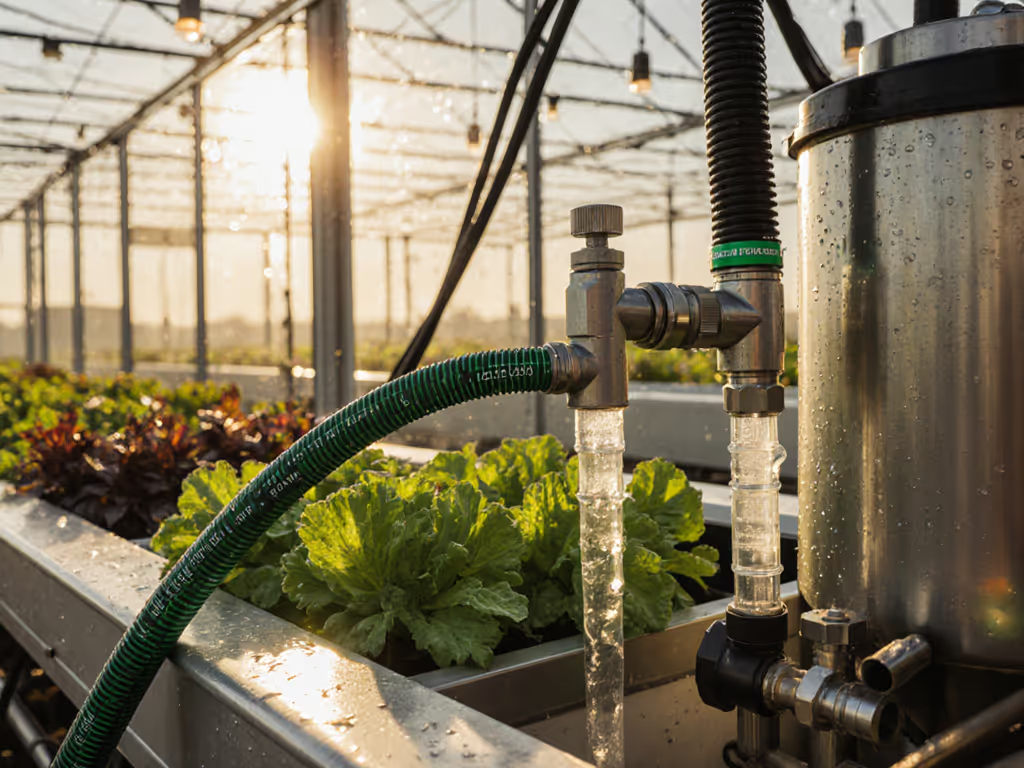
At the end of your trunk line sits the manifold: the hardware that splits flow into the hoses your members actually touch.
Basic Y-splitters vs multi-port manifolds
- Basic 2-way Y-splitters are fine for a single rinse hose plus one utility hose.
- For true high-volume community watering with three or more active lines, use a 3-4 port manifold with full-bore passages.
Look for:
- Internal bore that matches 3/4 in garden hose, not narrow drilled orifices.
- Individual shutoff valves at each port with ball-valve operation, not tiny quarter-turn paddles that restrict flow.
Brass vs plastic manifolds
Brass manifolds
- Pros: Strong threads, good temperature tolerance, better longevity under daily use.
- Cons: Heavier; can stress a weak spigot if used as a lever; may need support.
High-grade polymer manifolds
- Pros: Lighter; often friendlier to siding or posts if bumped.
- Cons: Thread durability drops if users over-tighten; less tolerant of freezing.
In a CSA pickup, fittings are opened and closed hundreds of times per season, often by different people. That is harsh duty. Brass or stainless manifolds with replaceable washers earn their keep quickly.
Wall-mounted vs ground-level manifolds
A wall-mounted manifold on a backer board at chest height:
- Makes valves visible and intuitive to use.
- Reduces trip hazards compared with hardware sprawled on the ground.
- Keeps connections out of standing water and mud.
Ground-level manifolds make sense only when spigots are low and wall space is not available. In that case, stake or crate them to keep them off the soil.
Integrating irrigation
If your pickup area doubles as a display garden, you may need one outlet dedicated to soaker or drip lines:
- Add a pressure regulator and filter on that branch only.
- Use a timer rated for sufficient flow if it shares the same spigot; many small timers choke trunk flow.
This keeps CSA pickup point irrigation stable without throttling your rinse stations. For consistent flow that protects delicate lines, add one of the best garden hose pressure regulators on the irrigation branch.
Verdict on manifolds
Choose a full-bore brass or stainless manifold with at least one more outlet than you think you need. Mount it where operators can see and label each port: 'Member rinse 1', 'Member rinse 2', 'Bulk fill', 'Irrigation'. That small bit of systems thinking prevents accidental shutoff of the wrong line during a rush.
Product category 3: quick-connects for rapid deployment garden hose setups
In a CSA context, quick-connects are not about convenience alone. They are about standardizing connections so staff and volunteers can reconfigure the system in seconds without cross-threading or wrenching.
Full-flow quick-connect vs restricted
Many consumer quick-connects have internal bores closer to 3/8 in than to 1/2 or 3/4 in. Put one in the wrong place and your otherwise well-sized system will feel weak.
For CSA use, prioritize:
- Full-flow designs where the internal passage matches or nearly matches hose ID.
- Metal construction (brass or stainless) with positive locking sleeves.
- O-ring seals that are easy to replace.
Use quick-connects at:
- Spigot to trunk hose.
- Trunk hose to manifold.
- Manifold outlets to branch hoses.
This lets you re-route or swap hoses if a station fails or traffic pattern changes on market day.
Brass vs stainless vs polymer quick-connects
- Brass: Good balance of strength, weight, and cost. Can dezincify in harsh water over many years but generally excellent.
- Stainless: Max corrosion resistance, ideal near salt air or in high-fertilizer environments. Higher cost.
- Polymer: Light and cheap, but often the failure point in high-duty systems. Suitable only for low-duty ends, like nozzle couplers.
Given the flow and duty cycle at a CSA pickup, metal quick-connects are worth it. Polymer can be reserved for guest-facing points where the risk of impact with vehicles is lower.
No-drain vs auto-drain
Quick-connects tend to trap small water volumes. In freeze regions, that trapped water can crack female bodies or fittings.
If you operate within a wide freeze-risk window, choose:
- Quick-connects that can be opened or disconnected at low points for drainage.
- Optionally, couplers with small weep ports when disconnected.
Paired with a clear shutdown checklist, this greatly reduces surprise spring leaks.
Verdict on quick-connects
Treat quick-connects as structural, not decorative. Choose full-flow, metal units sized to match your hoses, and standardize across the system. Label or color-code sets so new helpers know what belongs where.
Product category 4: nozzles and station hardware for member use
The hose is only as easy to use as the nozzle at the end. In a community setting, ergonomics and durability matter more than fancy spray patterns.
Fireman-style vs pistol-grip vs thumb-control nozzles
Fireman-style nozzles
- Twist to go from jet to wide cone.
- Very durable and flow-friendly.
- Can be less intuitive for some users who expect a trigger.
Pistol-grip nozzles
- Familiar feel; many spray patterns.
- Failure-prone triggers and internal parts in low-cost versions.
- Fatiguing for continuous use; not ideal for long rinse sessions.
Thumb-control or top-lever nozzles
- Easy for arthritic hands; push with thumb to open or modulate flow.
- Robust in simpler metal versions; some multi-pattern versions can be finicky.
For a CSA rinse station that many ages and strengths will use, thumb-control or fireman-style nozzles in metal housings tend to last and reduce hand fatigue. For durable, ergonomic options that resist leaks, explore our leakproof nozzle sprayer picks.
Flow and pattern requirements
Member rinse stations need:
- A strong but gentle shower that can rinse soil without bruising leafy greens.
- Ability to knock mud off roots with a narrower jet when needed.
Avoid nozzles labeled specifically for low-flow; they may be eco-friendly at home but will frustrate members rinsing multiple items. You are already saving water by preventing leaks, shortening rinse times, and using appropriate patterns.
Station hardware: hooks, holders, and basins
Think of each hose end as a mini-workstation:
- Install sturdy hose hooks or brackets so nozzles are not dropped in the dirt.
- Provide basins, perforated crates, or tables where produce can be rinsed safely.
- In high-traffic farmers market distribution hose setups, route hoses overhead or along edges to avoid trip hazards.
A tidy station feels professional and reduces abuse of the gear.
Verdict on nozzles and stations
Invest in a small set of heavy-duty, ergonomically friendly nozzles and mount each at a defined station with storage. This nudges behavior toward careful use and makes problems obvious: if a nozzle is missing from its hook, you know to find it before the rush.
Product category 5: reels, storage, and seasonal changeover
Storage is where many otherwise well-designed CSA hose systems fail. Kinks, coil memory, UV exposure, and freeze damage all stem from how and where hoses live.
Open vs enclosed reels
Open-frame carts or wall reels
- Pros: Visible hose condition, easier to drain, fewer plastic shells to crack in cold.
- Cons: Hose exposed to UV; requires some coiling discipline.
Enclosed box reels
- Pros: Cleaner appearance; protects hose from UV; hides clutter.
- Cons: Often trap water; difficult to fully drain; shells can crack or warp in temperature extremes.
In climates with hard freezes, open or drainable systems are safer. For storage solutions that fit fixed walls and mobile carts, see our best garden hose reels guide. In hot, sunny climates with minor freeze risk, enclosed reels can protect hoses from UV as long as you train staff to drain hoses before storage.
Fixed vs mobile storage
- Fixed wall reels make sense for permanent pickup zones, especially if you can mount them under an overhang.
- Mobile carts shine when hose runs occasionally shift between fields, wash zones, and pickup areas.
For mobile CSA or farmers market setups, pair shorter hose segments (25-50 ft) with quick-connects and a compact cart rather than a single 100 ft weight.
Winterization workflow
This is where climate-aware design repays the upfront thinking.
A simple, repeatable winter shutdown might look like:
- Close the interior shutoff feeding the exterior spigot (if present).
- Open an interior drain or bleeder to empty the line.
- Outside, open the spigot and all downstream valves.
- Disconnect trunk hoses at quick-connects and hold them vertically to drain.
- Walk hoses, lifting sections to encourage remaining water out.
- Store hoses and nozzles in a frost-free location, loosely coiled.
- Leave manifolds open so trapped water can expand safely.
If you operate in regions where warm days and freezing nights overlap your active season, supplement draining with insulation and, if code permits, frost-proof sillcocks.
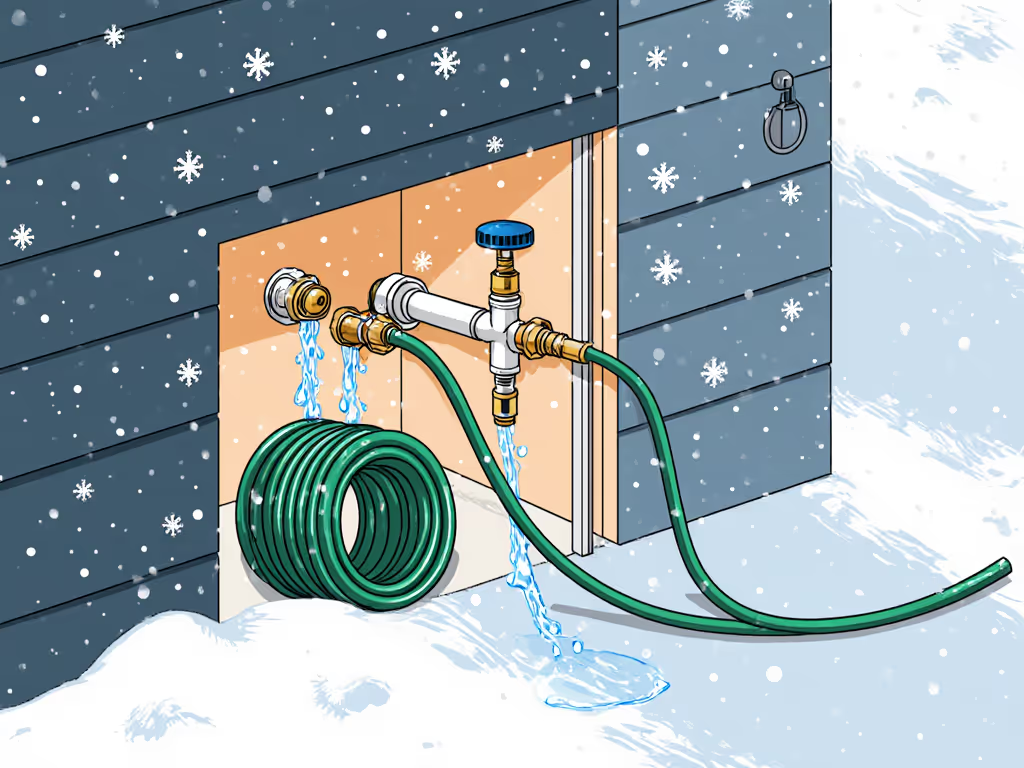
Build for your climate, and leaks stop before they start.
That line is worth repeating because every dollar you do not spend repairing damage is available for better hardware and better produce.
Verdict on storage and changeover
Design your storage with off-season steps in mind. If your layout makes it tedious to disconnect and drain hoses, it will not get done consistently. Use reels and hooks that guide people into the right behavior with minimal explanation.
Putting it together: sample CSA garden hose system configurations
To make this concrete, here are three system-level configurations that match typical CSA patterns. These describe categories, not specific brands, so you can match them to products that meet your budget and local availability.
Compact pickup on a single spigot (one main station)
Use when: You have 10-40 members, one pickup bay, and mostly hand-carried produce.
- 3/4 in trunk hose, 25-50 ft, commercial rubber or hybrid.
- 2-way brass Y-splitter or small manifold at the end.
- One branch to a thumb-control or fireman-style nozzle at a single rinse station.
- Second branch reserved for utility tasks or a small soaker on the display bed via a regulator.
- Open-frame wall reel near the spigot to store the trunk hose.
- Full-flow quick-connects at spigot and manifold for easy disconnection.
This setup prioritizes simplicity and low cost while preserving good flow to the main station.
Medium CSA pickup with two to three active stations
Use when: You host 40-120 members over several pickup windows and need two simultaneous rinse lines plus one bulk-fill or irrigation line.
- 3/4 in trunk hose, 50-75 ft, commercial rubber.
- 3-4 port full-bore brass manifold mounted on a backer board at chest height.
- Full-flow metal quick-connects at all manifold outlets.
- Two 5/8 in or 3/4 in branch hoses, 25-50 ft, hybrid or rubber, each with ergonomic nozzle.
- One dedicated branch with regulator and filter for soaker or drip in a nearby demonstration bed.
- Mix of fixed wall reels for trunk and hooks for branch hoses at their stations.
This configuration balances member convenience with maintainable complexity. Flow stays strong enough that two stations can operate without frustration.
Mobile farmers market / satellite pickup kit
Use when: You set up in a parking lot, church, or community center with varying spigots, and everything must pack into a vehicle.
- Short 3/4 in garden hose stub (10-15 ft) from spigot to a compact brass manifold.
- From manifold, a 1-2 in layflat or semi-layflat run if distance is long, with appropriate couplers.
- At the market area, a second manifold feeding two 5/8 in hybrid hoses with ergonomic nozzles.
- Quick-connects between all segments so the kit assembles like building blocks.
- All components stored in labeled crates: 'Spigot kit', 'Trunk kit', 'Station kit'.
This favors rapid deployment garden hose behavior: you arrive, click together a known sequence, and are ready before members show up.
Winterization and off-season strategy for CSA hose systems
Even if your CSA operates mainly in warm months, build a winterization plan into your system from day one. It directly affects what products you should choose.
Product choices that simplify winterization
- Use spigots with accessible interior shutoffs and drains where building design allows.
- Choose manifolds that can be removed entirely with unions or quick-connects.
- Avoid integrated hose boxes anchored in a way that makes removal difficult in freeze regions.
- Favor hoses with ends that drain easily; avoid end fittings that trap large pockets of water.
Off-season storage environment
For hoses, manifolds, and nozzles:
- Store in a dark, cool, frost-free place; UV plus ozone age rubber and plastics.
- Coil hoses loosely in large loops to prevent kinks setting over winter.
- Label bins for easy spring re-deployment; treat it like any other farm tool.
A little discipline here extends service life by seasons, not months.
Summary and final verdict: a matched CSA hose system pays for itself
When you step back, a reliable CSA garden hose system is not a miscellaneous pile of hoses and fittings. It is a compact water distribution network designed for your flow needs, layout, and climate margins.
The core takeaways:
- Size for flow: use 3/4 in trunk lines and full-bore manifolds so your community-supported agriculture watering can serve two or more stations without frustration.
- Protect climate margins: design for your freeze-risk window and your UV load. Quick-drain connections and drainable storage prevent surprise breakage.
- Favor durable materials: brass or stainless manifolds and quick-connects, rubber or high-grade hybrid hoses, and metal ergonomic nozzles resist the duty cycle of CSA pickups.
- Standardize and label: use consistent quick-connects, fittings, and station layouts so staff or volunteers can operate the system with minimal instruction.
Commercially, this is the difference between buying 'whatever hose is on sale' every spring and investing once in a system that quietly works for years. The upfront spend is higher, but the total cost of ownership drops when you stop paying in leaks, downtime, and mid-season replacements.
Build for your climate, and leaks stop before they start. Orient your choices around that principle, and your CSA or farmers market pickup will feel smoother for you, your team, and your members, with less wasted water, fewer surprises, and more bandwidth to focus on what you actually grow.
Related Articles